Skip to content
Rainforge

API integration services: connect the tools you already use

An API integration makes two programs pass data to each other by themselves, so nobody copies an order, an address or an invoice from one screen into another.

We build custom API integrations for small businesses whose tools come without a ready-made connector, or whose connector stops one step before the part that eats the day. The order desk of our own parts business is the example on this page: eight connections, one screen for the people packing.

Invent, our order deskone screen for packing, shipping, invoices and money
  • eBaynew orders in every five minutes; tracking numbers back
  • FedExlive rates, the label, the courier pickup, the customs invoice
  • A shipping brokerGLS, DPD, UPS and other carriers quoted side by side
  • számlázz.huthe invoice, with the VAT line worked out per buyer
  • EU VAT registera buyer’s VAT number checked before it is used
  • The bankbank lines sorted by rules, paid bills matched and closed
  • ICE, the listing appeach new listing and the boxes its units went into
  • The Kakapo Press shoppaid book orders, into the same packing and shipping
Each line is a separate integration with its own rules. Together they take an eBay order from the buyer’s click to the accountant’s month-end pack without anyone retyping it.

Integrations we built and run

Grouped by the kind of system on the other side. Each one is in production for our own businesses or for a client.

Marketplaces

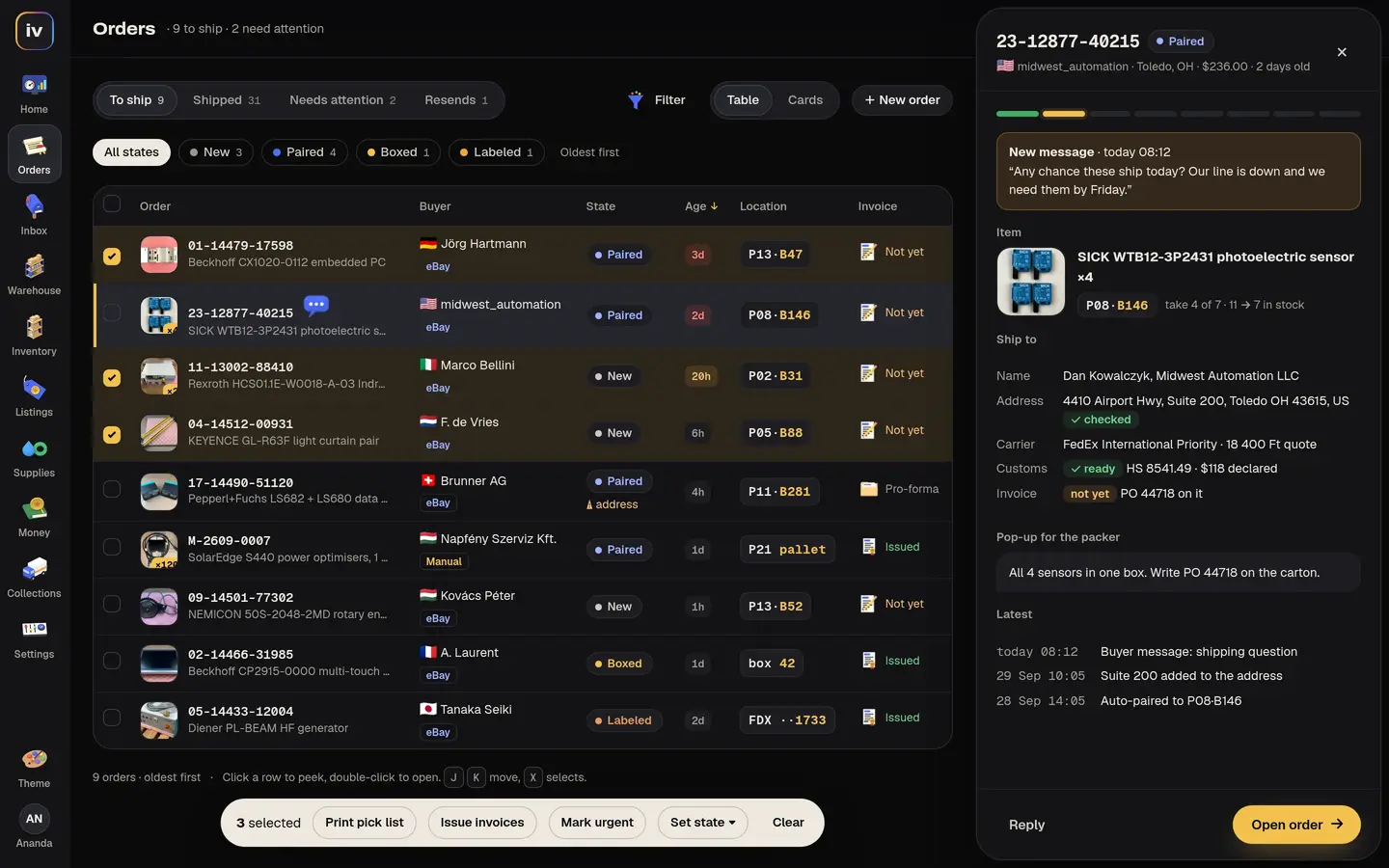
Invent fetches eBay orders by itself. When a listing says “lot of 6”, it works out how many units that is and pairs the order with the box that holds them, and the tracking number goes back to eBay on its own.

The Kakapo Press shop keeps its books in step with AbeBooks. It always sends the complete record, because a partial update there wipes the fields it leaves out, and it withdraws a book from the marketplace only after confirming the sale on that book’s own listing page.

Carriers and customs

A Hungarian shipping broker gave us the European carriers in one connection. For the main FedEx lanes we added a direct one a few weeks later, because that route allows electronic customs papers and courier pickups.

Book before half past twelve and FedEx collects the same day; later bookings move to the next working day, skipping weekends and Hungarian public holidays, the moving Easter ones included.

Invoicing and tax

Invoices go out through számlázz.hu with the VAT treatment worked out per buyer: Hungarian VAT at home, reverse charge for EU businesses with a valid VAT number, zero-rated export outside the EU. A VAT number typed into a checkout note is checked against the EU register first.

The bookshop’s invoices use the EU margin scheme for second-hand books. One button issues the invoice once, and it refuses any order marked as a test.

Payments

Kakapo’s checkout hands the buyer to a hosted card page. A signed message from the payment provider marks the order paid exactly once, and if that message goes missing, a scheduled job asks the provider and recovers the order.

On the Iron Rainbow marketplace every payment is shared between the coating shop, Iron Rainbow, a marketing budget and any partner who handled the job. The rules live in one place with tests that check the amounts.

Google, ads and social platforms

The bookshop sends Google Merchant Center a feed of every book with a photograph, shipping cost per country included. Advertising tags load only after the visitor agrees.

Iron Rainbow’s content engine publishes to seven platforms, with tracked short links that show which post sent people to the site, and brings new comments back in.

Email, phone and chat

In the CRM we built for Iron Rainbow, replies to outreach emails come back in on their own, and anyone who answers STOP is never written to again. When a shop fills in the website form, it is matched to the shop already on file and the team chat gets an alert.

Calls on the business line are transcribed on our own servers, and the onboarding answers go straight into the shop’s profile.
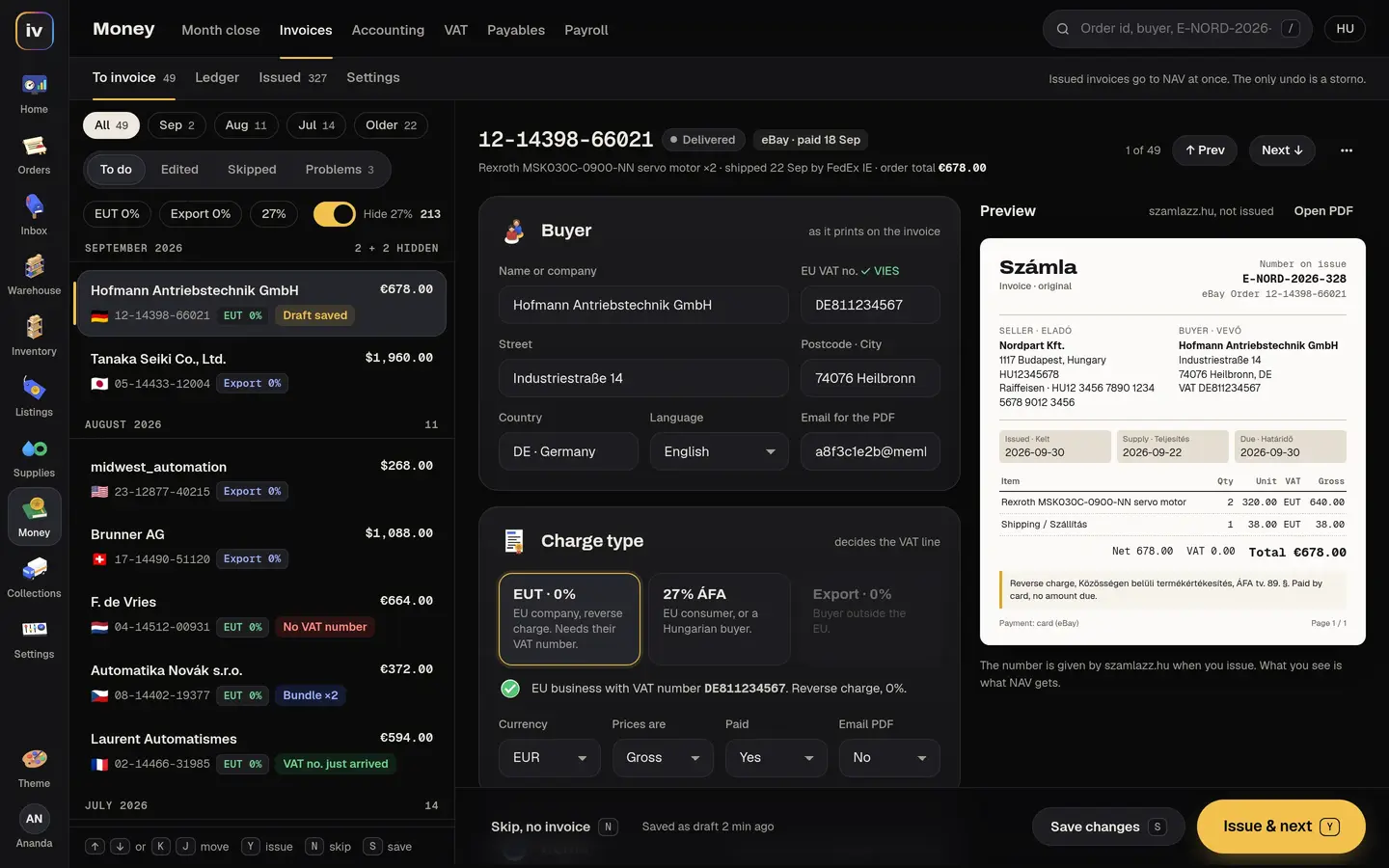
Invent invoices screen with orders waiting for an invoice, a reverse-charge VAT choice and a számlázz.hu invoice preview (example data)
Invent’s invoice queue: the VAT line chosen per buyer, the VAT number checked, and a preview of what számlázz.hu will issue.
Invent order list of open eBay orders with part photo, buyer country, state and age (example data)
eBay orders as they arrive in Invent, oldest first, with the part photo and the buyer’s country.
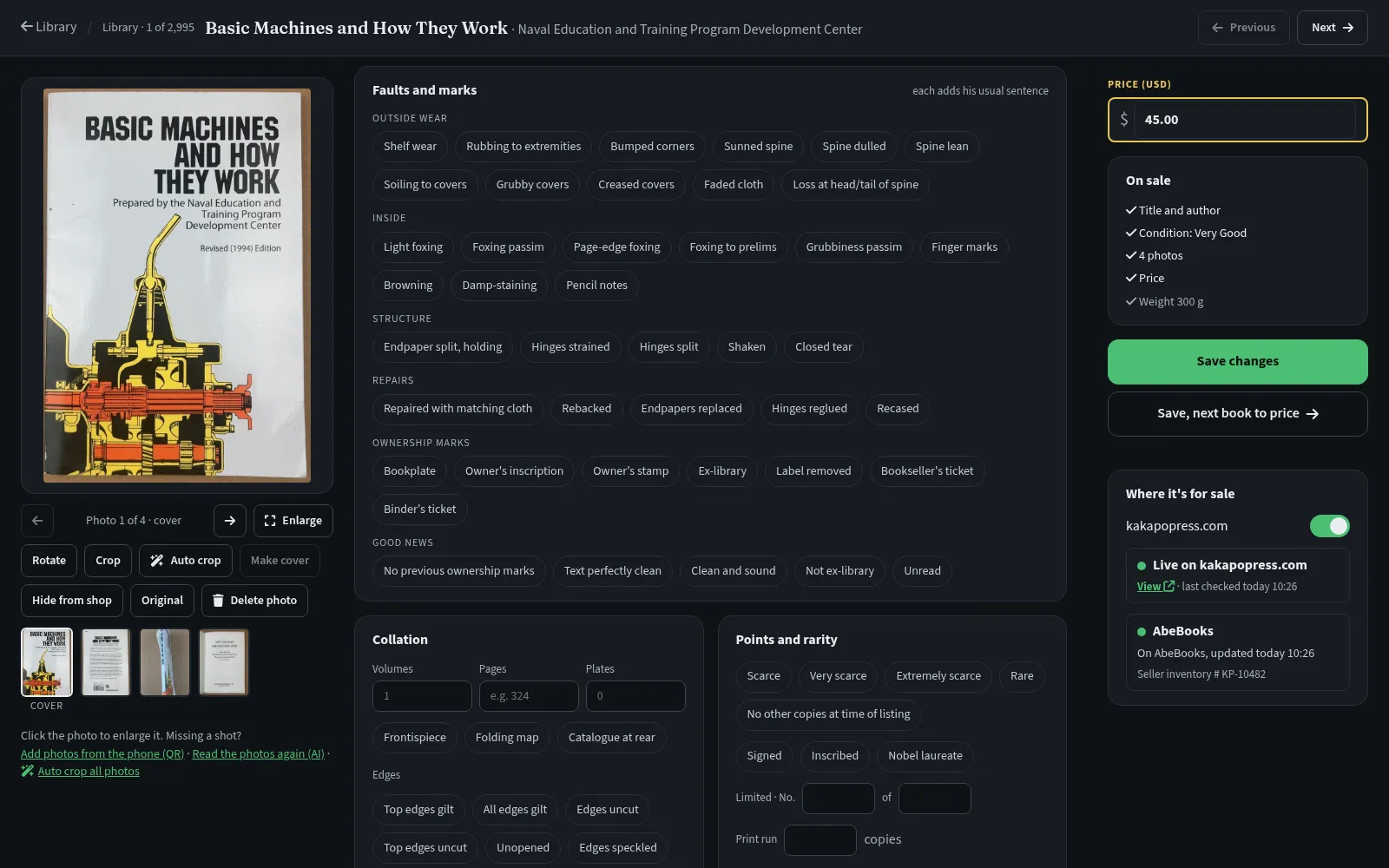
Kakapo book page with a panel showing the book live on kakapopress.com and updated on AbeBooks
One save in Kakapo puts the book on the bookseller’s own shop and queues the same record for AbeBooks.

What we connect

Shops, marketplaces, carriers and invoicing services we have connected for our own businesses and for clients.

Shops and websites
Shopify, WooCommerce, WordPress
Marketplaces
eBay, Etsy, AbeBooks, Jófogás (Hungary)
Accounting
QuickBooks
Payments and banking
Stripe, PayPal, Revolut Business, Wise
Carriers in the US
UPS, USPS, FedEx, DHL, TNT
Carriers in Hungary
GLS, Foxpost, MPL, DPD, Packeta, Express One, Sameday
Invoicing in Hungary
Számlázz.hu, Billingo, NAV Online Számla

How we build an integration

Most of the work goes into the cases where something goes wrong: a missing field, a message that never arrives, a key that expires.

  1. 1Walk the step with youWhich screen someone copies from, where it goes, and what they check on the way. Those checks become rules in the integration.
  2. 2Read the other side’s rulesIts documentation, the limits on requests, and what it does with a half-filled record. AbeBooks taught us to always send the full one.
  3. 3Build against a test accountWhere the service has one. Live sending is locked to the production server, a rule we set after a test copy of our order desk sent real messages to buyers.
  4. 4Queue it, so nothing goes twiceEvery email and reminder in the CRM is a row that has to be claimed before it is sent. Nothing is sent twice, and nothing gets skipped.
  5. 5Report what did not happenA daily list of anything that shipped without an invoice, a parcel held at customs, a key that stopped working. A person sees the gap the same day.

A ready-made connector may be enough

If two popular apps need one simple step between them, a few dozen times a month, Zapier or Make will do it for a monthly fee and no build. We would tell you that on the call.

A custom integration pays when the step needs your own rules, when the service is missing from the connector’s list, or when a double send costs money. When each one fits

Questions about API integration

What is a custom API integration?

Code written for your business that connects two or more systems through their APIs and applies your own rules on the way: which carrier, which VAT line, which box. A ready-made connector moves the data; a custom integration also makes the decisions your staff make today.

How long does an API integration take?

It depends on the other side. Our order desk was connected to eBay and booked its first live label through the shipping broker in May 2026, and the direct FedEx connection followed a few weeks later. Our fixed eBay listing package goes live in 2 to 3 weeks.

What does an API integration cost?

We price it on a call, per milestone, once we have read the other side’s documentation. Most integrations are part of a bigger build; see what custom software costs. For eBay sellers there are fixed packages on the services page.

What happens when the other service changes its API?

Care covers it: services change their rules and we change the integration. Right now the bookshop is waiting for a new access key from AbeBooks; Kakapo holds every change in its queue until it arrives, and the shop’s own two-hourly check keeps it in step meanwhile.

Can you connect Shopify, WooCommerce, Etsy or QuickBooks?

Yes. We connect Shopify, WordPress and WooCommerce shops, eBay, Etsy and Jófogás, QuickBooks, Stripe, PayPal, Revolut Business and Wise, UPS, USPS, FedEx, DHL and TNT, the main Hungarian carriers and the Hungarian invoicing services. See QuickBooks, payments, Shopify, WooCommerce, eBay and Etsy and shipping.

What about a system that is not on your list?

Most business software publishes an API. On the call we read its documentation against the step you want automated before we quote. The same goes for an ERP.

What if a system has no API?

Then we find the next best door. For a recycler in Hungary, the software prepares exactly what the office types into the national waste register. When FedEx only says something by email, our order desk reads the email.

Read next

Stop copying between screens

Thirty minutes with us. Show us the two screens your team copies between, and we tell you whether their APIs can do it, what we would build and what it costs.

Book a call about connecting your tools