Custom CRM with its own lead generation
Iron Rainbow needed coating shops as partners and had no reliable list of them. We mapped the trade and built a CRM that works the list by phone and email.
A marketplace with nobody on the other side
Iron Rainbow’s idea only works if there is a good coating shop near every customer. Say someone in Denver designs their wheels in the 3D Customizer and pays; a shop in Denver has to be ready to take the job. So before the marketplace could open, the founding team had to sign up shops. As soon as they started, they ran into the problem: nobody knew where the coaters were.
Search a map for “powder coating” and you get real shops mixed with paint stores, tint shops and people with a spray gun in their garage. The trade directories were out of date and repeated each other. Bought lists came as rows of names with no hint of whether the business owned an oven. And there was no system behind the selling. Leads lived in spreadsheets and in whatever the founder remembered between calls, and the founder spent much of his time on the road.
He needed a list of shops he could believe, with some sense of which ones were worth a call. Then he needed to reach them without burning his email domain or wasting his phone time.
Counting every shop in the country
We started in December 2025 with something small: take a list from a paid mapping service, read each shop’s website, have an AI decide whether it fits, and send an email. Every step turned up the next problem.
The paid service couldn’t search narrowly enough, and every search cost money. We moved the searching onto our own machines, where a search costs electricity. Then we hit the question nobody could answer, which was whether we had found them all. A sweep of the big metros looked complete until we tried Victorville, California, and found coaters the metro sweep had never seen. So we searched every US city with more than 10,000 people, and every shop we found records the exact search that turned it up.
Being on a map doesn’t make a business a powder coater. Our system reads each shop’s website and decides what it does: which coatings, whether it blasts, how big the oven is, which markets it serves. It also judges how much the shop needs what Iron Rainbow offers. Shops without a website are judged from their map listing, and anything the system isn’t sure about goes into a queue for a person. Early on the founder made rulings that went into the rules the same day, such as “paint stores are not a fit”. Once the pipeline worked for the US, we ran it for Canada, in French as well as English, and then for more countries.
Making the phone the main tool
Then the hard part moved. Email from a young sending domain landed in spam, and on one list the newer domain bounced a large share of messages while an older domain sent to the same list bounced none. Meanwhile, nobody had phoned a single shop. So we made the phone the main channel and let email support it.
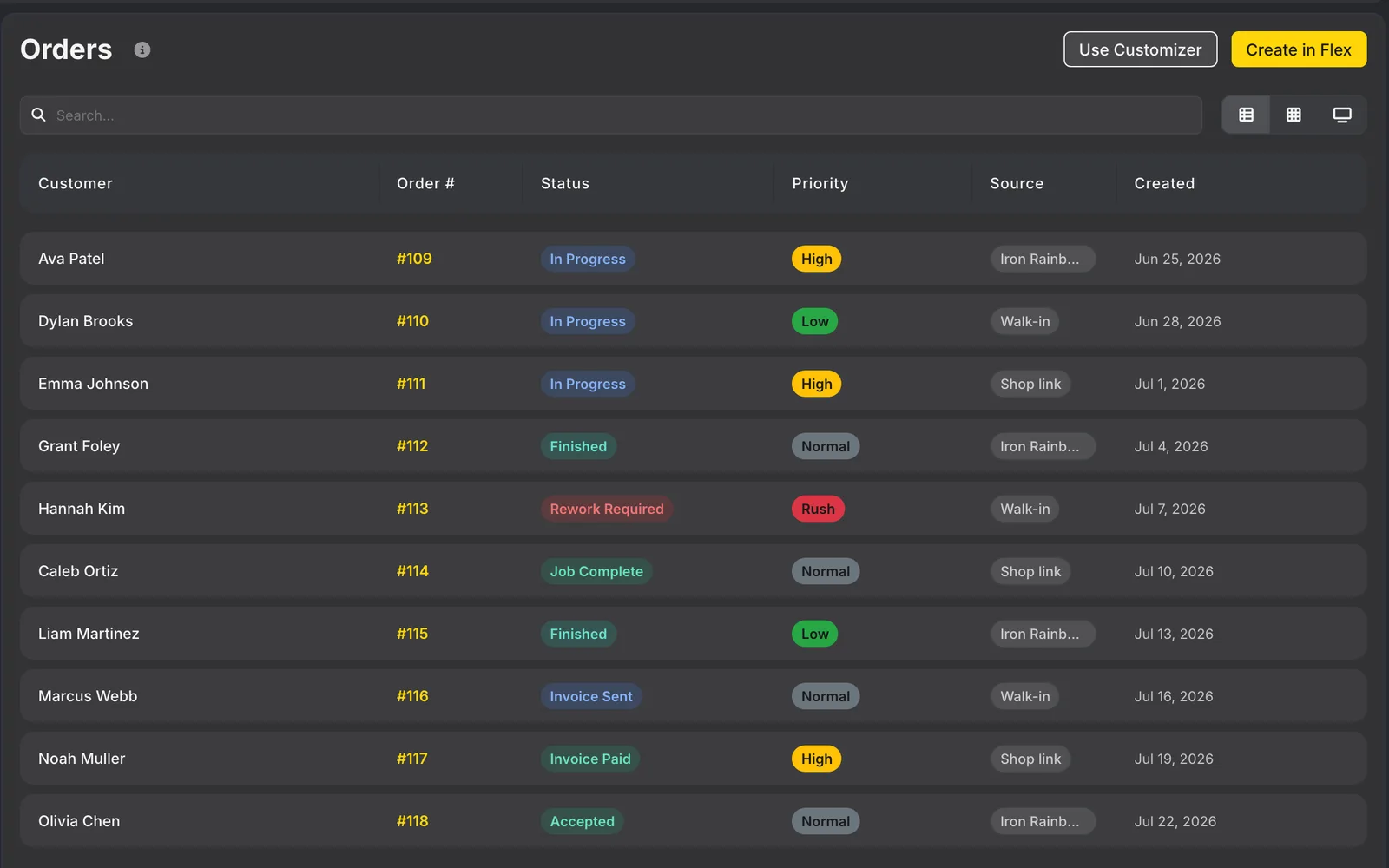
The team now opens a call queue sorted by who is most likely to have a good conversation, which isn’t always the best shop. A shop with great reviews and no website is a better call than a polished shop that already has more work than it can take. Each shop comes with a script written from what we know about it. After the call, the outcome goes in with one click, and the callback schedules itself: the next day for “call back”, two days later after a voicemail. Calls on the business line are transcribed on our own servers. For onboarding calls there is a step-by-step Call Runner, and the owner’s answers go straight into his shop profile.
Emails are still written for every shop, and a person approves each one before it goes. The drafts follow rules the team set, like never guessing at a shop’s equipment. Replies come back into the CRM on their own, and anyone who replies “STOP” is never written to again. When a shop fills in the form on Iron Rainbow’s website, the system matches it to the shop it already knows, puts it on the “Today” board and alerts the team chat. The welcome email goes out once, and only once.
Decisions made on the road
The founder traveled a lot, so we worked in long sessions and left written handoffs, with his rulings recorded the day he made them. Every promise in an outreach email is checked against one document that states what Iron Rainbow pays and charges, and that document is checked against the payout code.
We decided to run everything ourselves: the searching, the database, the AI that reads websites and the transcription. The map of the trade is the company’s biggest asset, and a new country costs almost nothing to add. A human signs off anything that leaves the building. The system books a meeting from an email reply only when it is very confident the person picked one of the times offered; otherwise it makes a card for someone to handle. And after an early notifier lost leads during an update, every email and reminder became a row in the database that has to be claimed before it is sent, so nothing goes out twice or gets skipped.
The bottleneck is now calling time
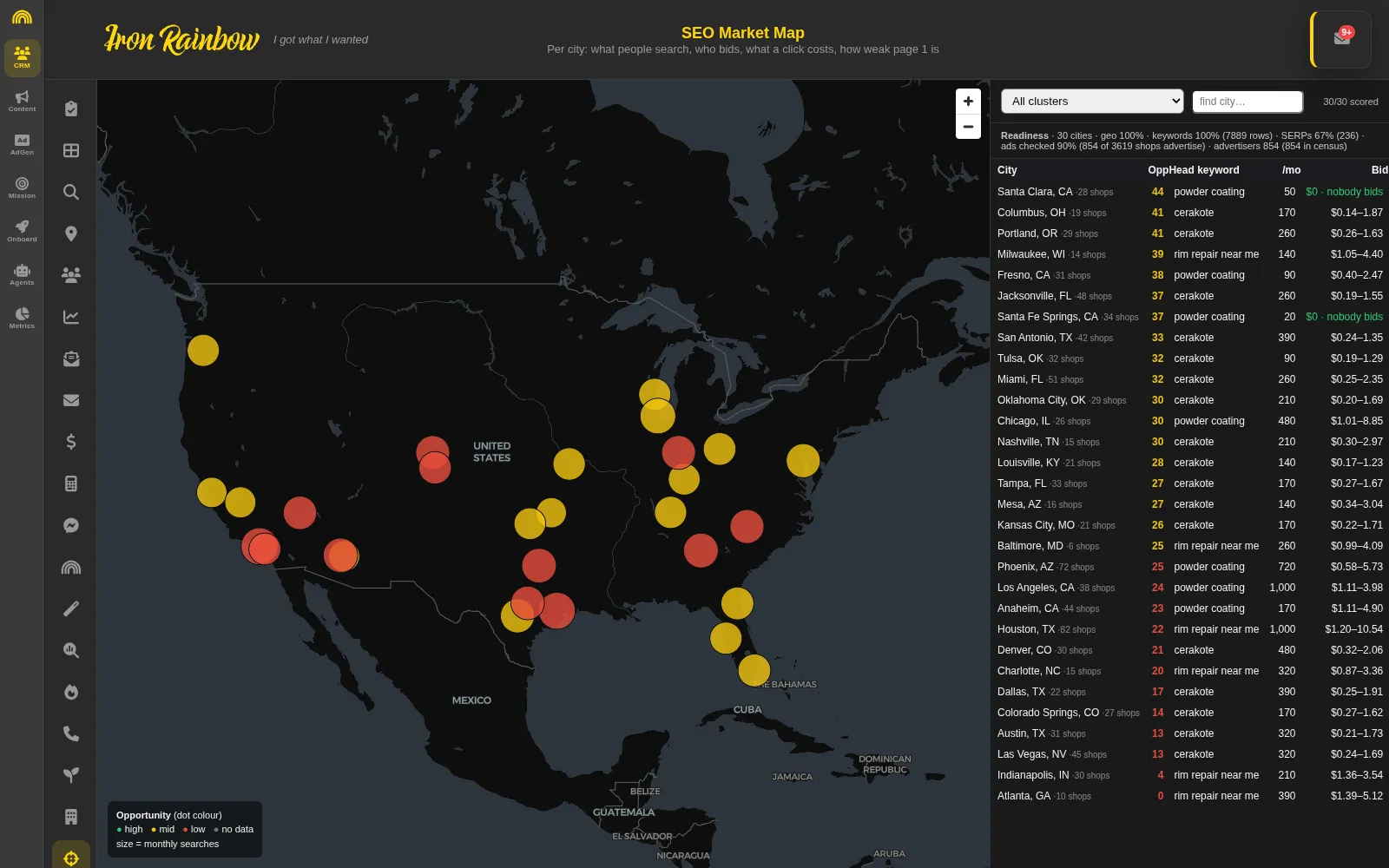
Iron Rainbow’s team starts the day in one app. It knows which shops coat and where they are, who raised a hand overnight, who is due a callback and which meetings are coming up, with reminders going out a day before and an hour before. The same map was reused for a nationwide census of wheel repair shops and for a study of search demand in 30 US metros, which showed that almost no coating shops advertise on social media. What limits it now is how many hours the team can spend on the phone.
Screens
Keep reading