3D customizer and coating marketplace
Iron Rainbow lets anyone in the US color a part in 3D, see a price and send the job to a coating shop nearby. We built the whole platform with the founder.
A color you could only imagine
Iron Rainbow started from a small, stubborn annoyance. If you want your wheels, a bike frame or an old intake manifold powder coated, you have no way of seeing what the color will look like on your part. You can’t get a price without calling several shops and waiting days. The shops have the mirror image of that problem. Their work comes in by phone, text, walk-in and web form, and a big share of the day goes on quoting people who never come back.
The founder wanted to fix both sides at once. A customer would design the job on a 3D model of their own part, pick from powders a shop can buy, and see the price move as they changed things. They would pay up front, and the finished order would go to a certified shop near them. Behind that storefront sat everything a marketplace needs: a map of who covers which area, a way to split each payment fairly, software for the shops, and tools for Iron Rainbow’s own team to keep adding parts and finishes.
Designing the job on screen
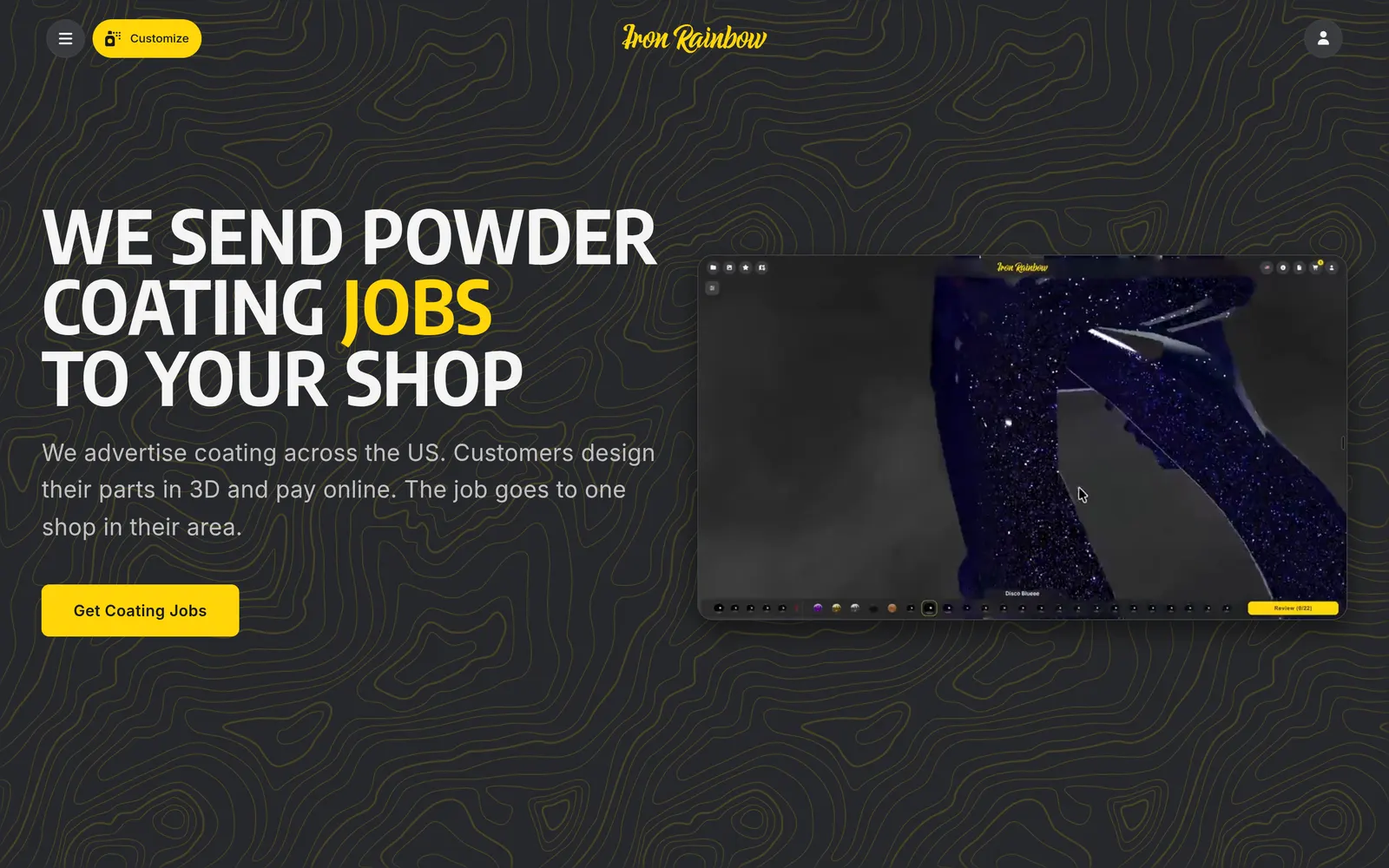
The piece customers see first is the Customizer. You choose a part, say a three-piece wheel, and it splits into the pieces a coater would treat separately: the face, the barrel, the lip, the center cap and the bolts. Each one can take its own color, and the colors include the fancy ones people ask shops about, like candy, flake and chameleon finishes that shift as you turn the wheel. Quantity, size, condition and extra services sit in a side panel, and the total updates as you go. We made the 3D view adjust itself to the device, so it stays smooth on a phone or on the tired PC in a shop office.
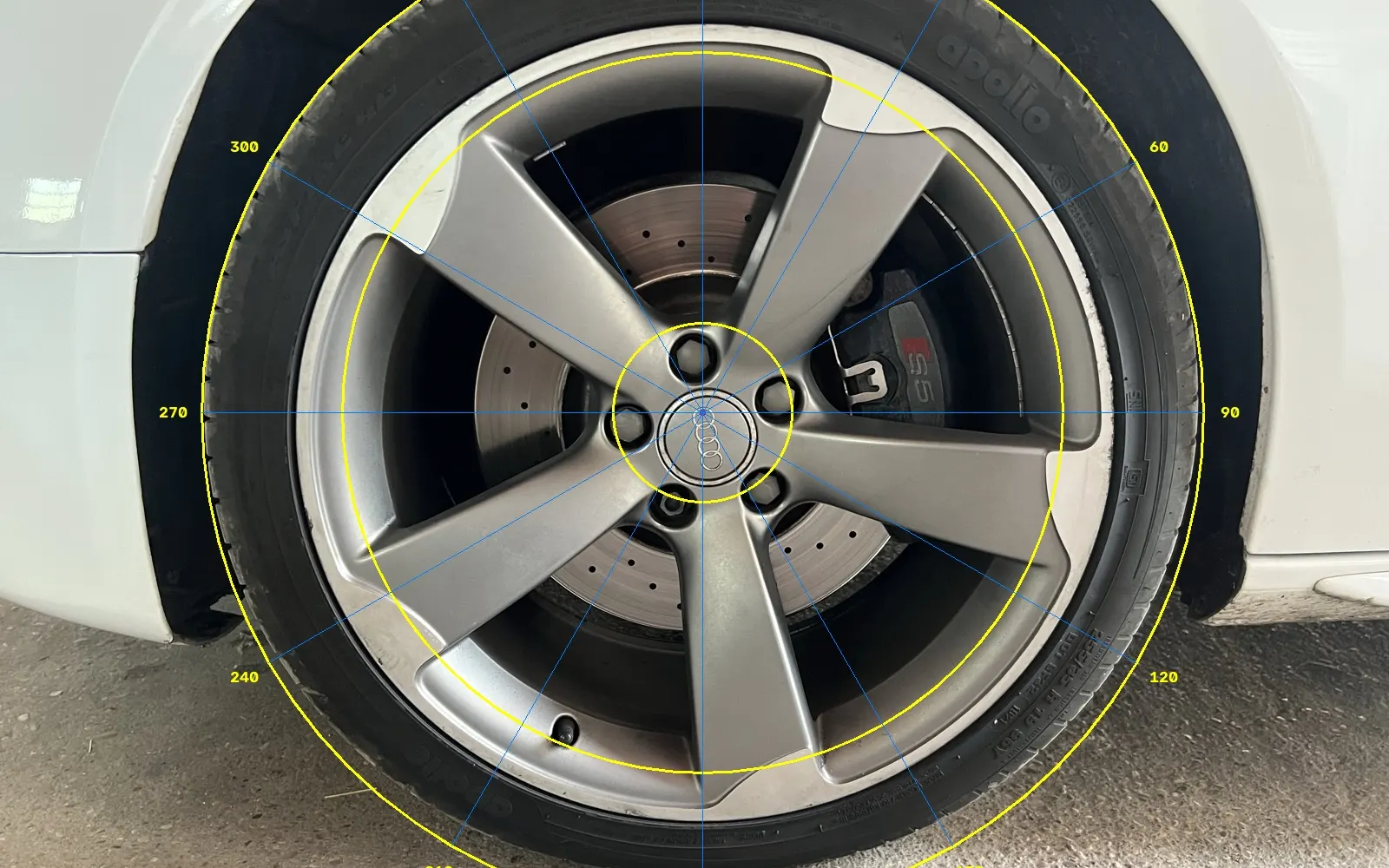
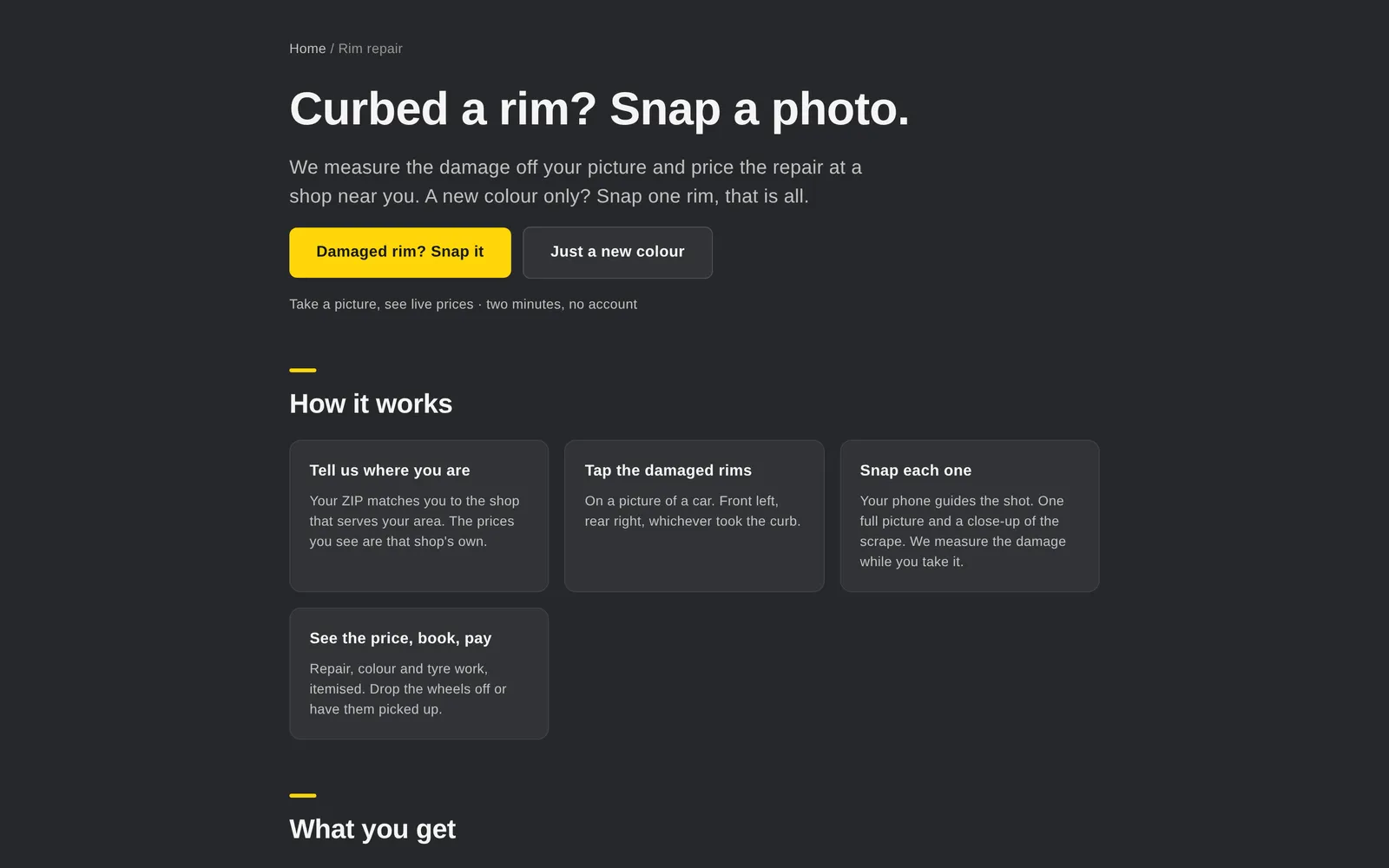
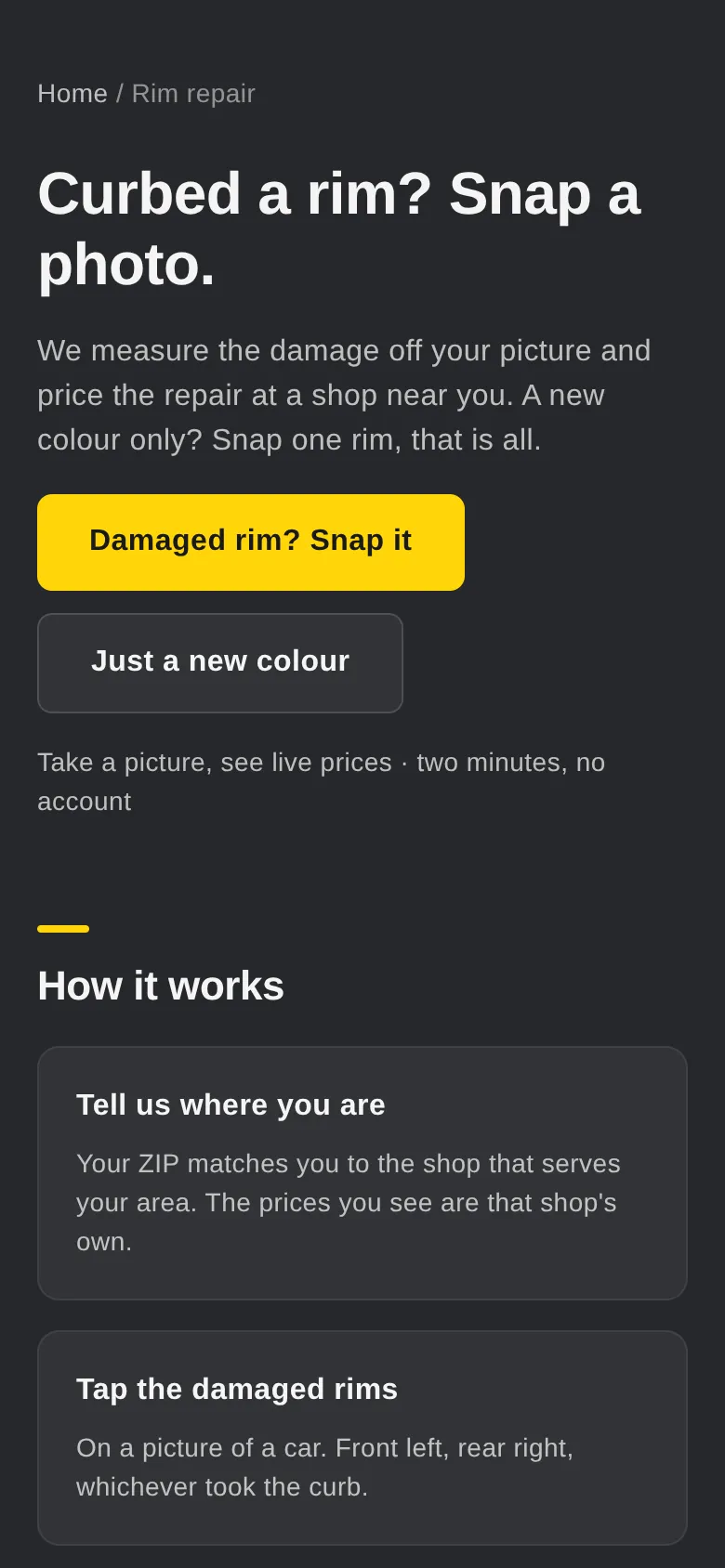
Plenty of people own something that isn’t in any catalog. For them there is a camera button. They photograph the part, and the platform works out what it is and whether it can be coated, and often builds a 3D model they can color. That work has its own story in the Iron Rainbow Vision case.
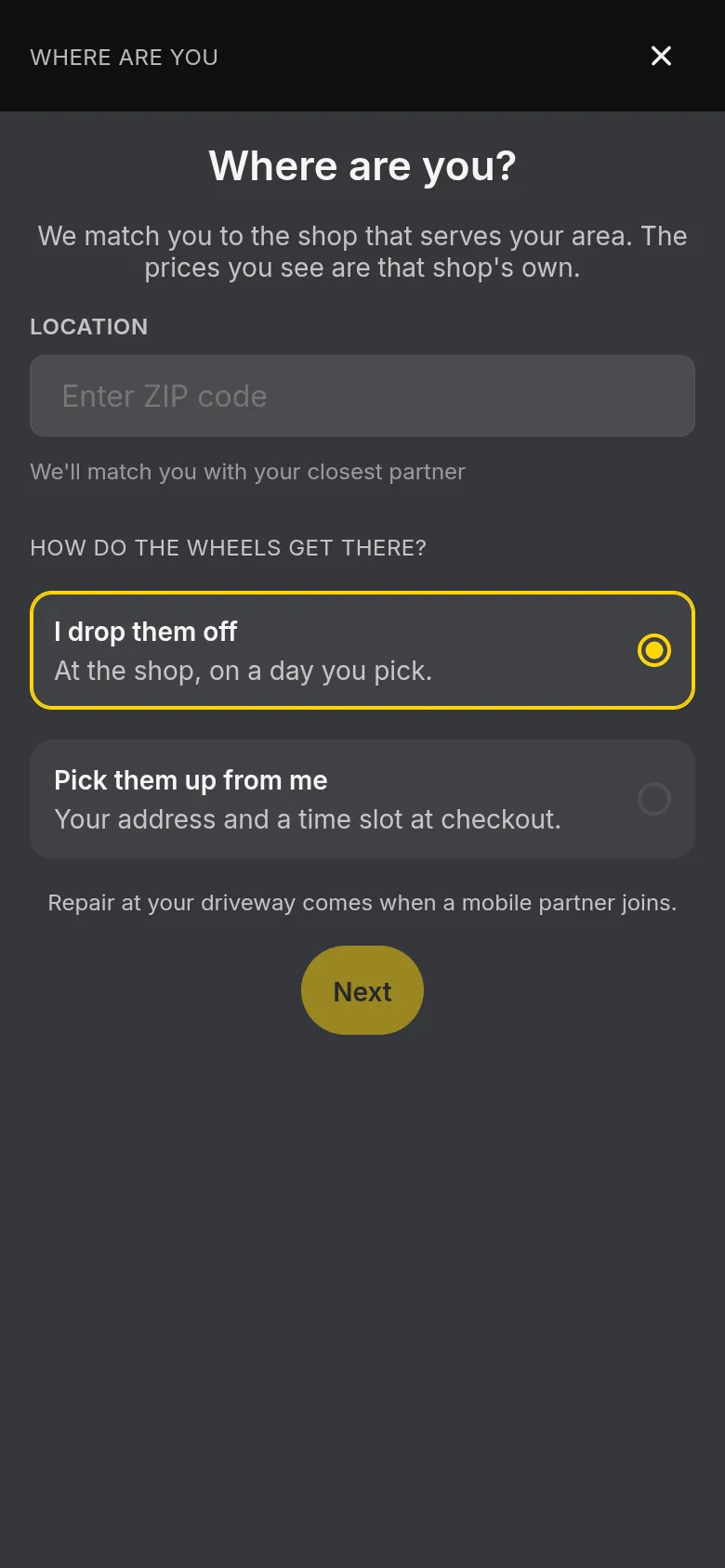
When the customer pays, their ZIP code decides where the job goes. Every ZIP in the country belongs to a partner shop, and if the owner of that area can’t do a particular job, it goes to the nearest shop that can. We chose that rule on purpose. A territory gives a shop first call on the work around it, and the customer still gets served when that shop is busy or lacks the equipment.
Everyone who touches the part
A coating job has more people in it than you would guess. Some customers drop wheels at their tyre shop, which passes them to the coater and collects them again. Retail shops sell coating as an add-on. Affiliates send customers in. We gave each of these partners their own portal, and we gave every physical hand-off a QR code. When a part changes hands, someone scans it, and anyone following the order can see where it is. Only a signed-in partner can mark it sent or received, so a stray scan changes nothing.
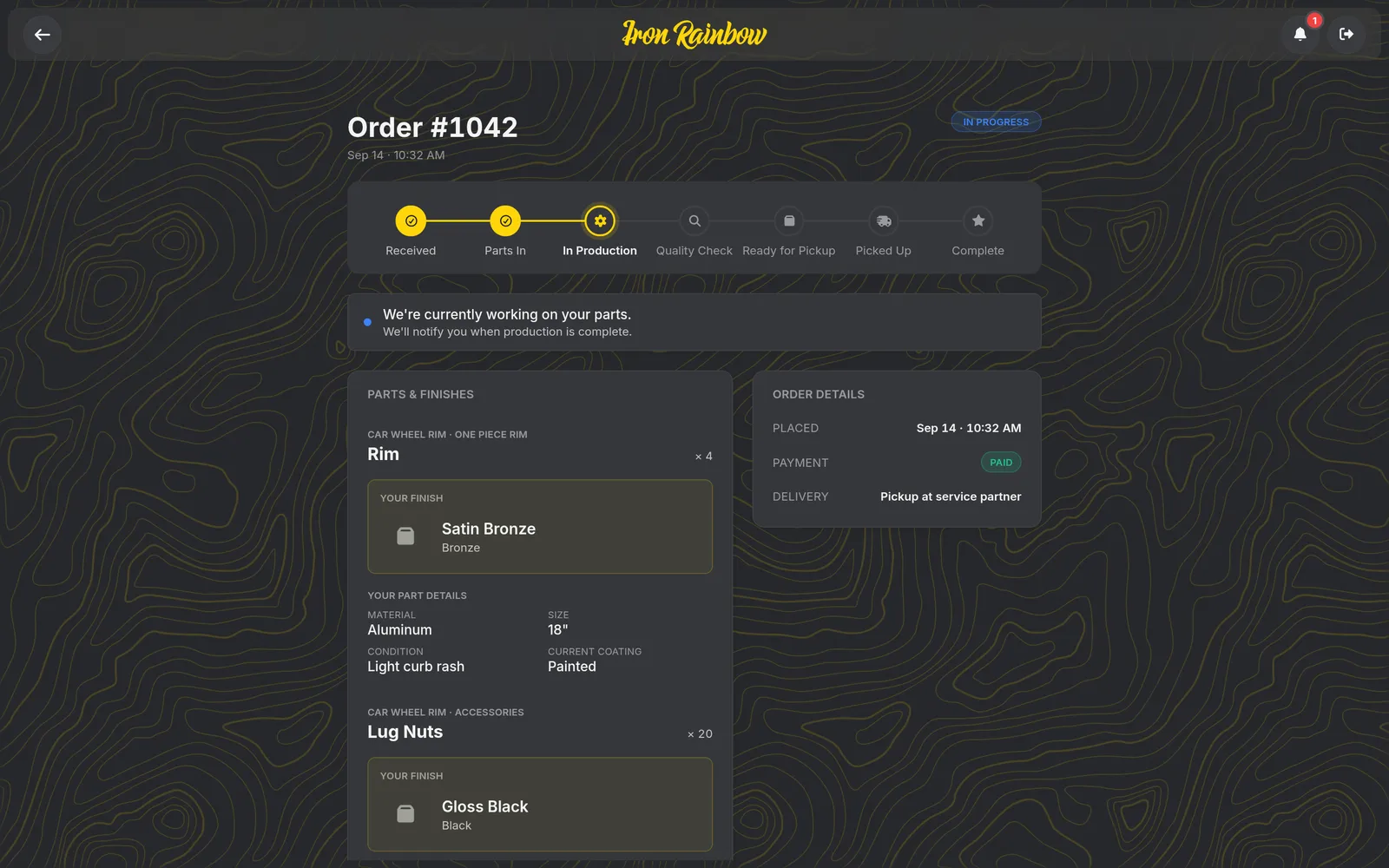
The customer follows the same trail from their order page, with a timeline, tracking links when parts ship, and photos of their job.
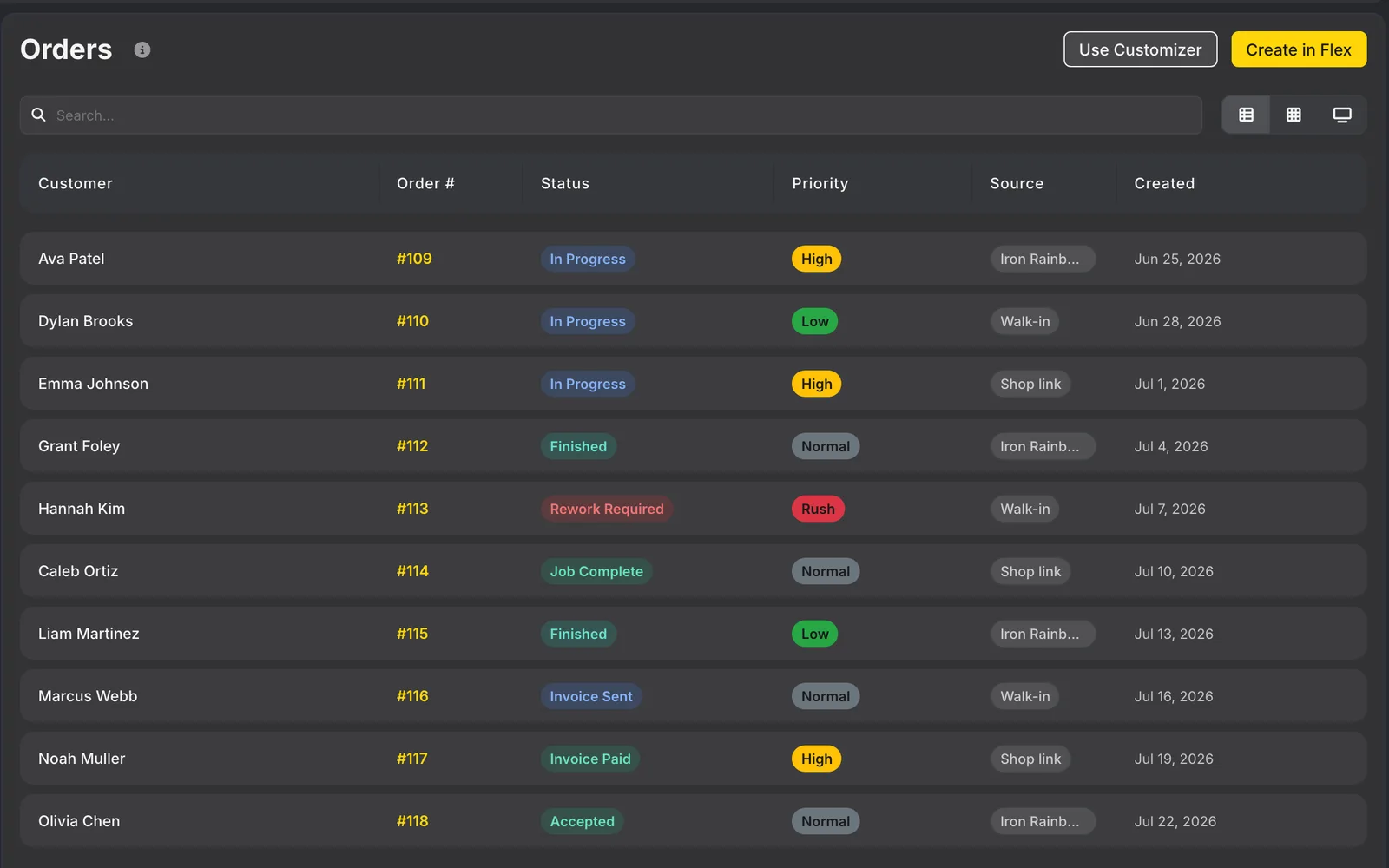
The coating shops run their side in Rainbow Flex, a full shop management system we built for them. That grew into a product in its own right and has its own case study.
Money was the part we treated most carefully. Every order is shared between the shop, Iron Rainbow, a marketing budget and any partner who referred or handled the job. All of those rules live in one place with tests that check the amounts, so when the founder changes a commission or someone writes a sales page, there is one place to check the figure.
Building it alongside the founder
We worked as one product team with the founder in the room. He set the commercial rules, such as how territories are graded and who gets what share of an order, and wrote them down. We turned them into code and tests. When a document and the running site disagreed, we treated the site as the truth and fixed the document.
Iron Rainbow’s staff needed to grow the catalog without us, so we built them Labs, an internal admin. In Labs they add new parts and package deals, design new finishes with their own flake and shimmer effects, manage ZIP codes and partners, and turn photos of parts into clean icons. When a customer uploads a photo, staff can open a trace of every step the AI took on it, which makes odd results easy to explain.
In March 2026, before the first shop was signed, the team stopped adding features and went through every part of the platform looking for security holes, data problems and slow pages. The fixes went in before any partner was onboarded.
The first founding partner, a powder coating shop, came on in August 2026 over two long screen-share calls. Bugs he hit were fixed between sessions, and his pricing screen was rebuilt while he watched. He started the second call finding it confusing and ended it happy with it. His feature requests went into a written log, and his way of pricing a wheel became the model for automatic quotes.
Live at ironrainbow.com
The platform is live at ironrainbow.com. A customer can color a part in 3D, see the price and pay. The order goes to the coating partner who covers their ZIP code, and that shop runs the job in Flex from inquiry to invoice. The first shop’s team liked how the metallic powders rendered. Iron Rainbow’s staff keep adding parts and looks in Labs without waiting on us.
If you sell a product that comes in many options, we build the same kind of tool for it: see the 3D product configurator.

Screens
On the phone
Keep reading