Training AI to grade wheel damage
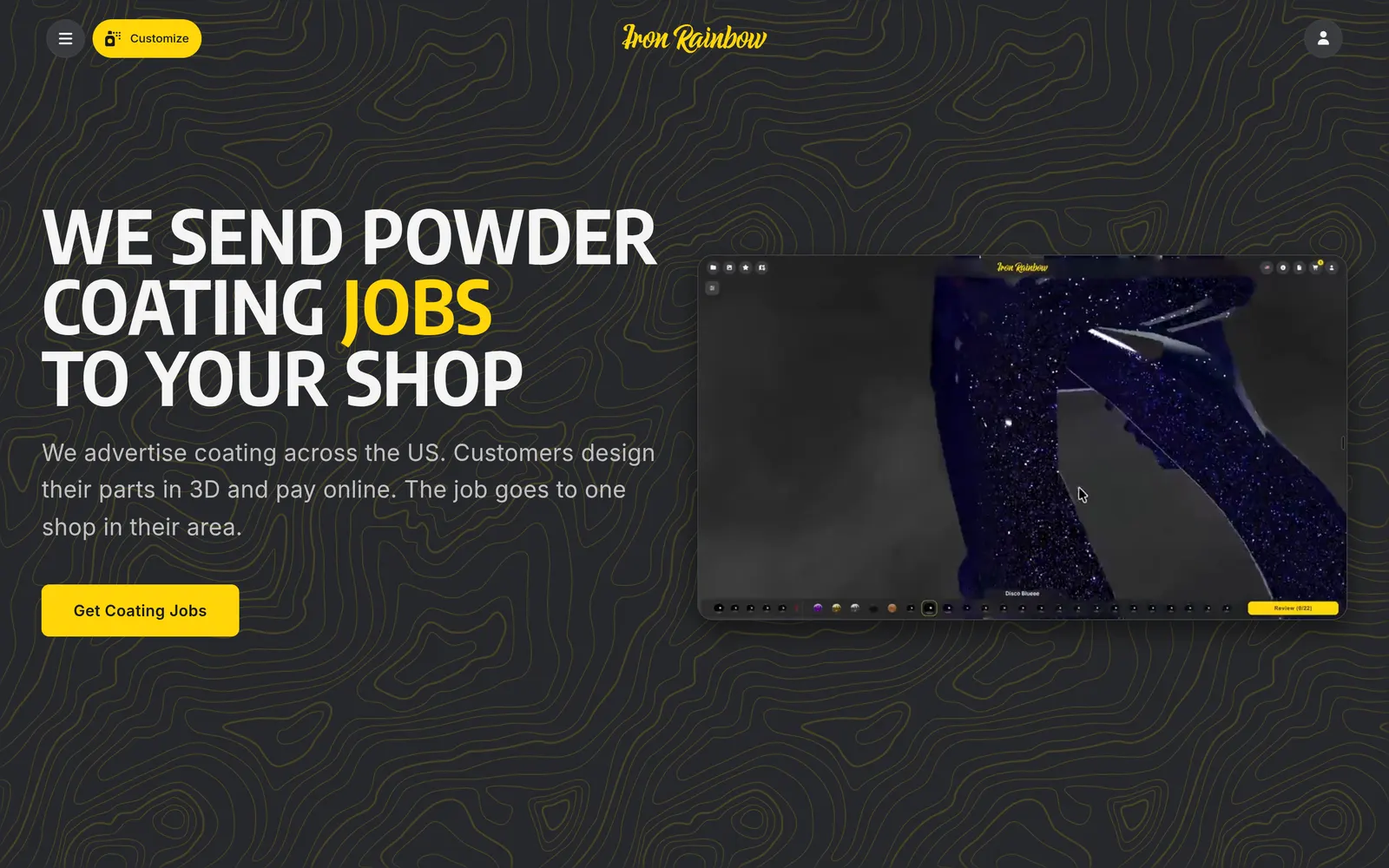
Iron Rainbow wanted a photo of a damaged wheel to say if it can be coated, needs repair first or should be turned down, in terms a coating professional trusts.
The call every coater makes at the counter
When a customer brings a wheel to a powder-coating shop, someone looks it over before anything else happens. They decide whether it can be coated as it is, needs work first because of curb rash, an old filler repair or corrosion, or should be refused because it’s cracked or bent in a way coating won’t hide.
An experienced coater makes that call in seconds. The trouble for Iron Rainbow was that its customers are online. They upload photos of a wheel from their driveway, and the shop has to guess. The quote comes back slowly, and sometimes the wheel turns up with a problem nobody saw in the pictures, and the shop finds it on the bench.
Iron Rainbow wanted the photos themselves to give the answer, in enough detail that a coater would read it and agree.
A verdict from a few photos
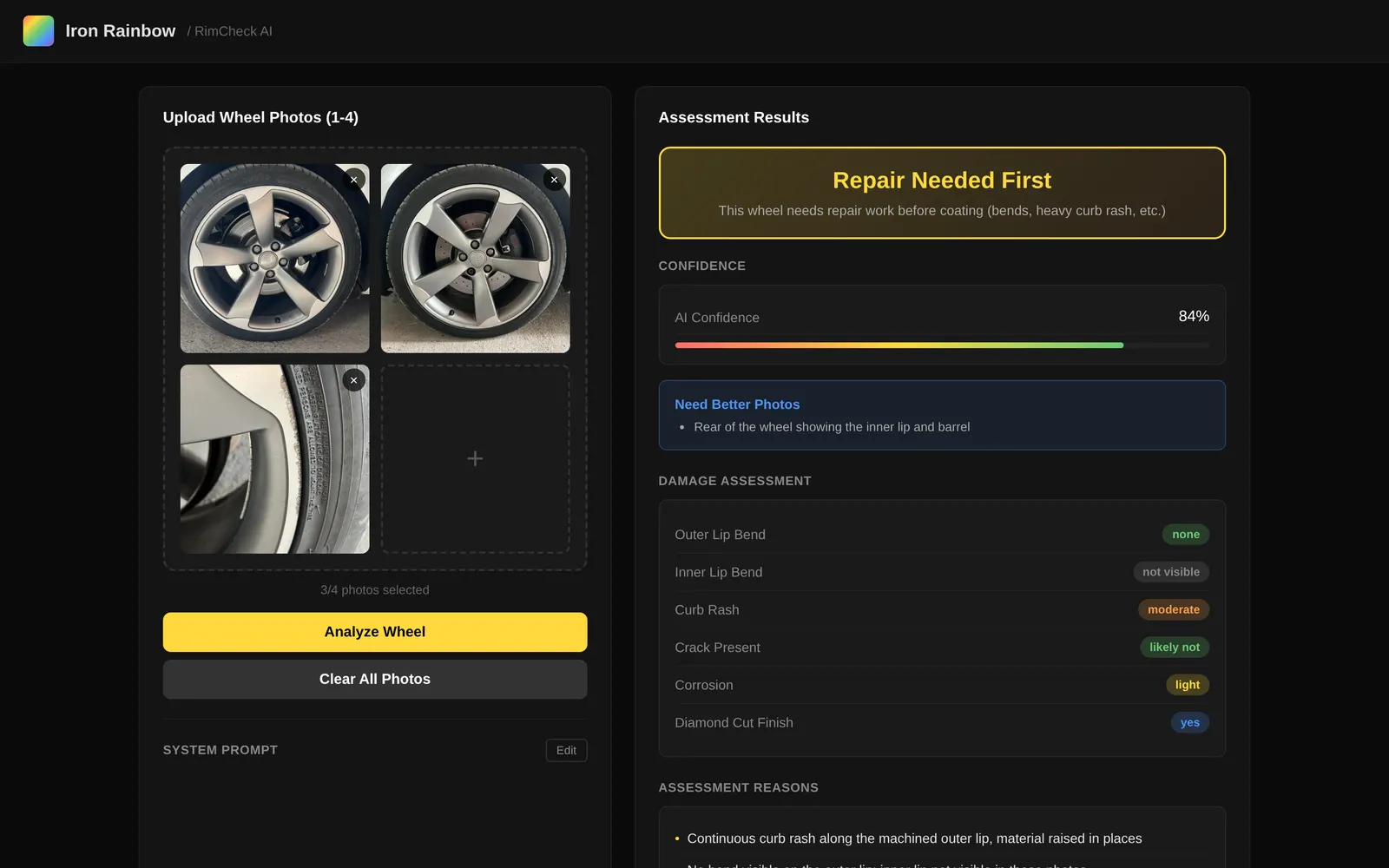
We put up the first prototype in December 2025. The customer drags in up to four photos of a wheel. The software gives back a clear verdict, coat as it is, repair first or reject, along with what it saw on the wheel and where.
We made the instructions the AI follows editable right in the browser. That mattered because the people who know wheels are coaters. They can read what the software is told to look for and change it, and try the change on the same photos a minute later.
Setting the bar where a coater would set it
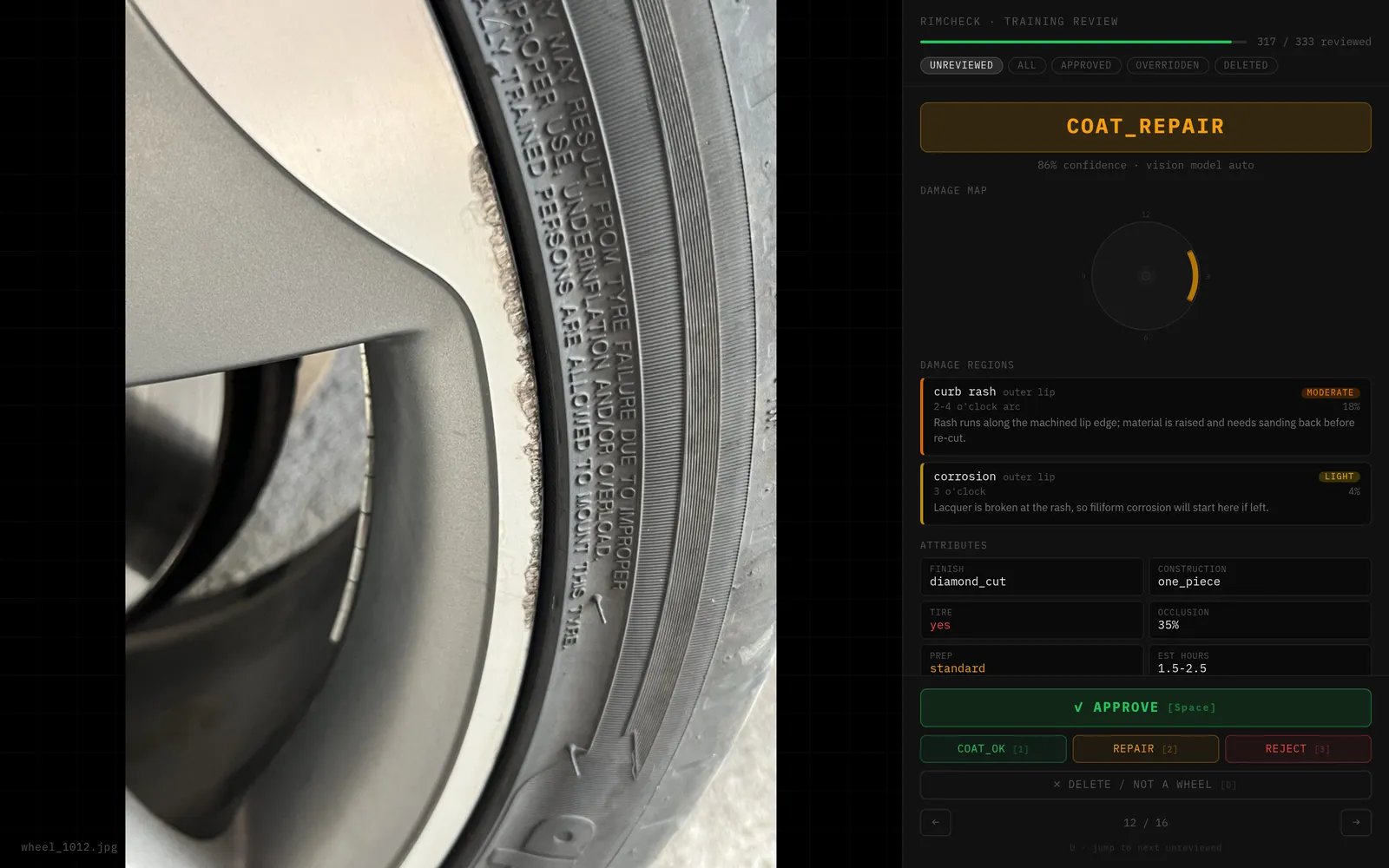
A bare “curb rash detected” is no use to a shop. It doesn’t say where the damage is or how long the prep will take. So in May 2026 we wrote down what a good answer looks like, in the shop’s language. The written plan describes an answer so thorough a coater would say it had spotted everything. It gives each area of damage with its position on the rim, read like a clock face, curb rash along the outer lip from eight to ten o’clock, for example. It flags an old repair at seven o’clock where the filler outline shows and warns the shop to check for a hidden crack before committing. Then it lists the prep steps in order, with an estimate of the hours.
That plan became the list of things the software records for every wheel. There are more than twenty of them, among them the finish, whether it’s a one-, two- or three-piece wheel, earlier repairs, damage to the spokes and bead seat, and any safety concerns. We made the list long on purpose from the start, so the pictures we labelled would stay useful as better models come along.
Building a pile of labelled wheels
Our long-term plan is for Iron Rainbow to have a model of its own, running on its own machines. That would cost less per photo and answer fast enough for a live camera mode. A model like that has to learn from examples, and when we wrote the plan we had four labelled wheels, all of them the “repair first” kind.
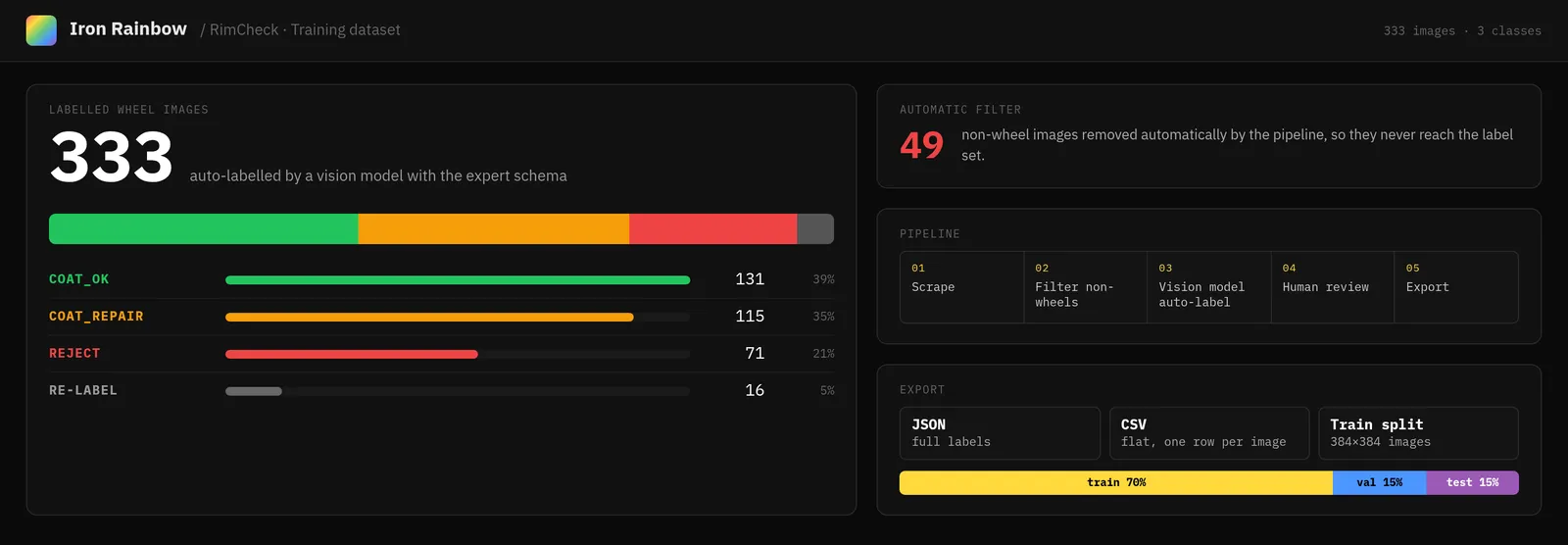
So we built a way to get more quickly. A script collects wheel photos from the web, and a large AI model labels each one against the full checklist. Pictures that aren’t wheels are thrown out on the way in. Within two days of starting that run we had a first set of a few hundred labelled wheels, split across all three verdicts, with a few dozen non-wheels filtered out automatically.
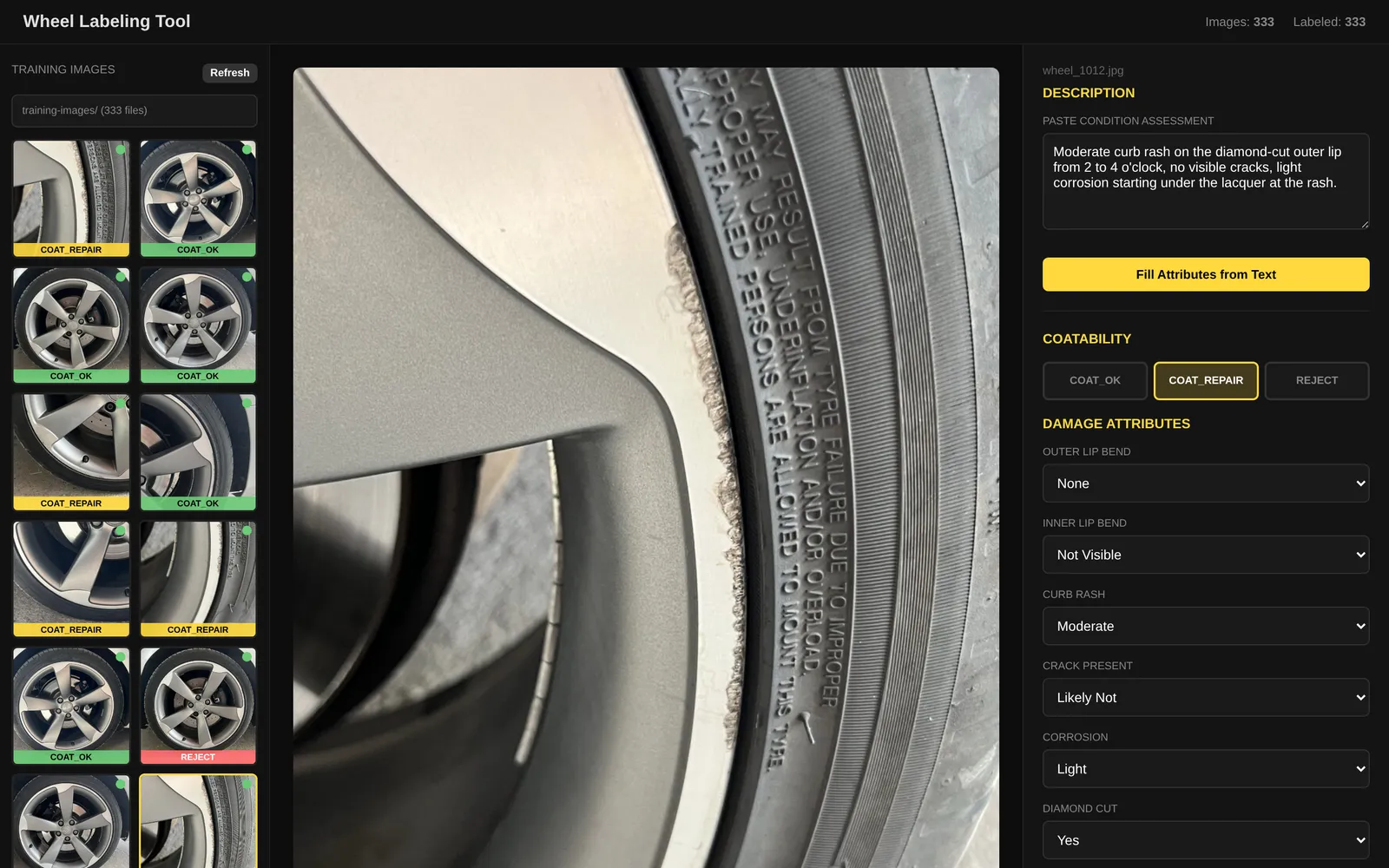
A machine’s labels aren’t the truth, though. We built two screens for people: one to label a wheel by hand, and one to go through the machine’s labels and approve, correct or delete each. When a set is ready, one request exports it, either as plain data files or already split for training.
A prototype waiting for people to check its work
This is still a prototype. The verdict tool works: a few photos in, a verdict and a damage map out. The labelling and review screens work, and the first set of pictures is waiting for people to check it. We kept the classifier apart from the customer-facing Customizer on purpose, until a model of Iron Rainbow’s own proves itself on wheels a person has checked. Iron Rainbow’s wider wheel work, described in the Iron Rainbow Vision case, grew out of the same questions and uses the same three verdicts. Still to build are the local model and the hand-off to the Customizer, with each area of damage marked on the photo itself.
Screens
Keep reading