AI diagnosis of powder coating defects
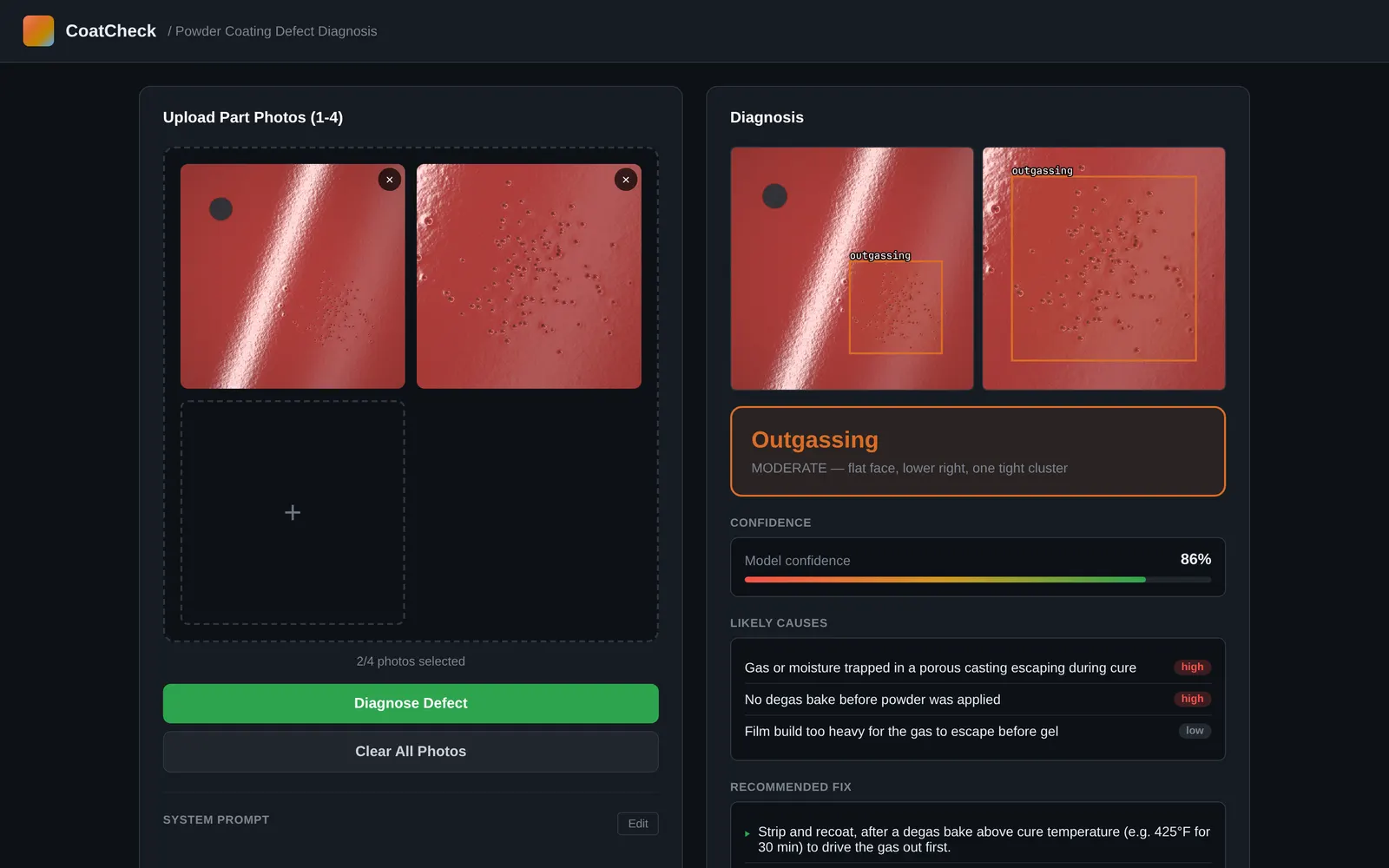
CoatCheck reads up to four photos of a flawed powder-coated part and names the defect, its likely cause and what to change, as an experienced coater would.
When a finish comes out wrong
A powder-coated part comes out of the oven with tiny craters across the face, or a coat that flakes off at the edge. The shop needs to know what the defect is and how to stop it happening on the next batch. The customer mostly wants to know whose fault it was.
The answers live in the heads of people who have spent years in a spray booth. They’ll look at a photo and say, for example, that it’s outgassing from a casting that needed a longer pre-bake. A shop that opened last year often has nobody like that. A customer holding a phone photo of their rim has even less to go on.
For Iron Rainbow this mattered twice over. When a customer and a partner shop disagree about a finish, someone has to judge it fairly and quickly. And as the network adds newer shops, the quickest help Iron Rainbow can give them is a plain explanation of why a batch went wrong.
Testing whether an AI can read a defect
CoatCheck started in May 2026 as a quick experiment next to Iron Rainbow’s other vision work. The question was narrow: given a strict list of defects written the way coaters talk, whether an AI that reads images could diagnose a flawed finish well enough to help.
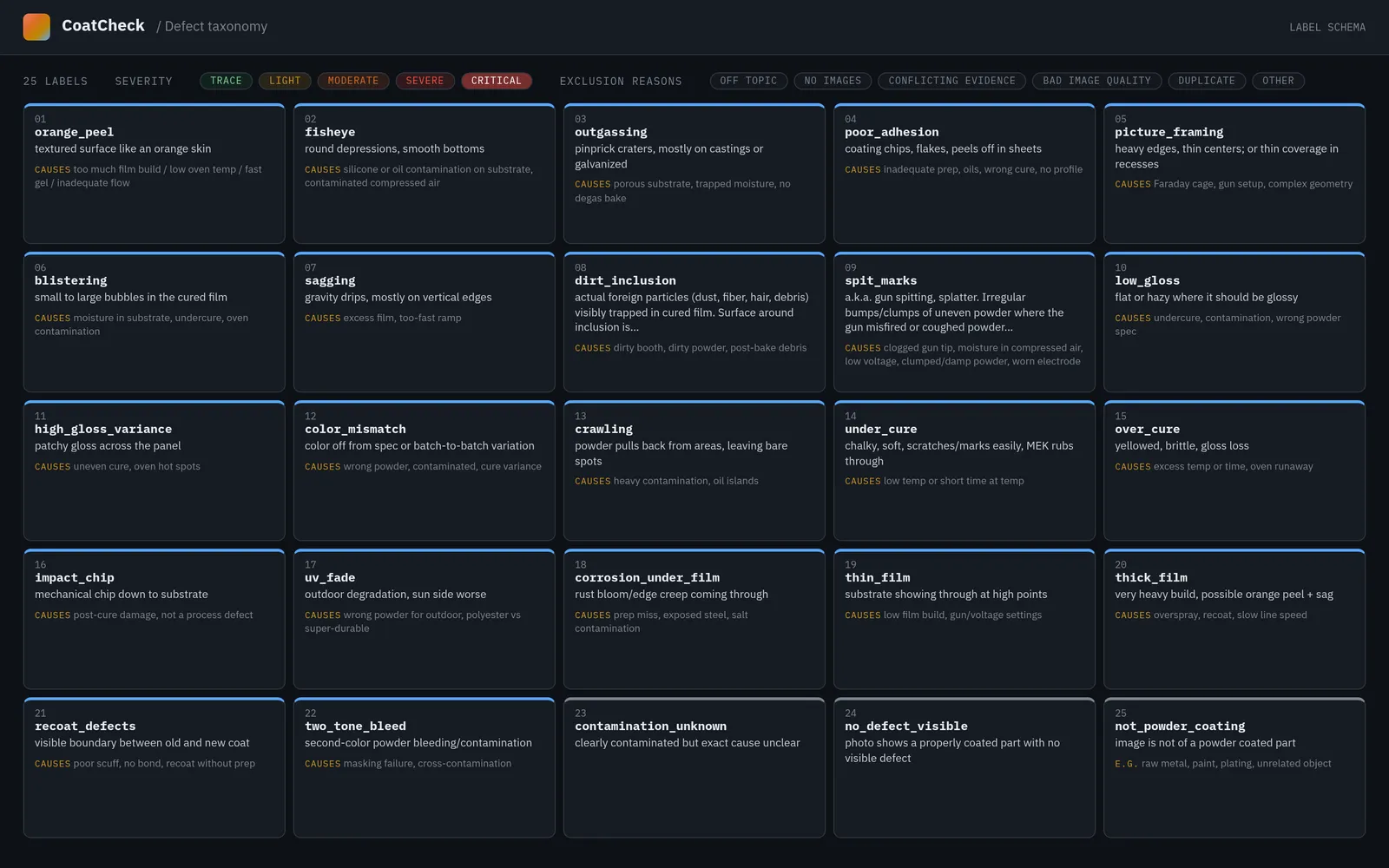
We started with the list, because everything else depends on it. It has 25 labels, covering the defects coaters argue about: orange peel, fisheyes, outgassing, poor adhesion, picture framing around the edges, blistering, sags, dirt in the film, under- and over-cure, film that’s too thin or too thick, trouble with recoats, corrosion creeping under the coat, and more. Two labels cover the photos where there is nothing to diagnose: “no defect visible” and “not powder coating”. Each defect carries its usual causes, and every diagnosis gets one of five severity levels. The same list drives both the AI’s instructions and the screens people use, so the two can never drift apart.
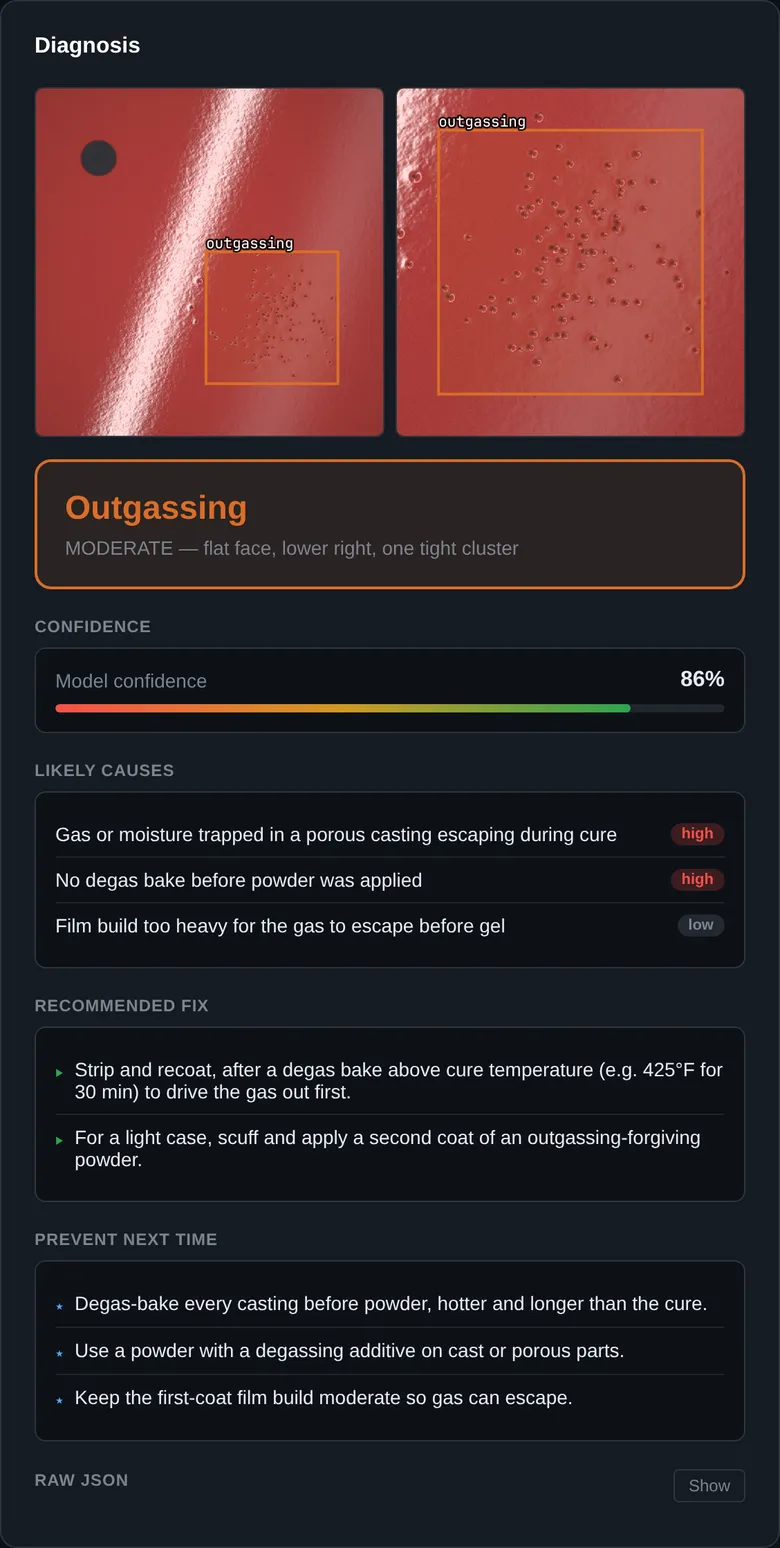
The diagnosis itself is plain. You give it up to four photos. It tells you the main defect and any secondary ones, how severe they are, the most likely cause and what to change. A typical answer reads like “likely cause: contamination on the substrate”, which a shop can act on.
Learning from coaters who had already argued it out
To know whether the diagnoses were any good, we needed cases with a known answer. Coaters had already made them for us. In public coating communities, people post photos of a finish that went wrong and ask what happened, and experienced coaters answer in the comments. Each of those threads is a phone photo from a working shop with an expert diagnosis attached.
We built a small scraper to collect those posts. A labelling script then reads each thread as a whole: what the AI sees in the photos, what the poster wrote, and what the top expert replies said. From those it settles on one label for the case. The same method, pointed at wheel photos, produced a second set for rim damage.
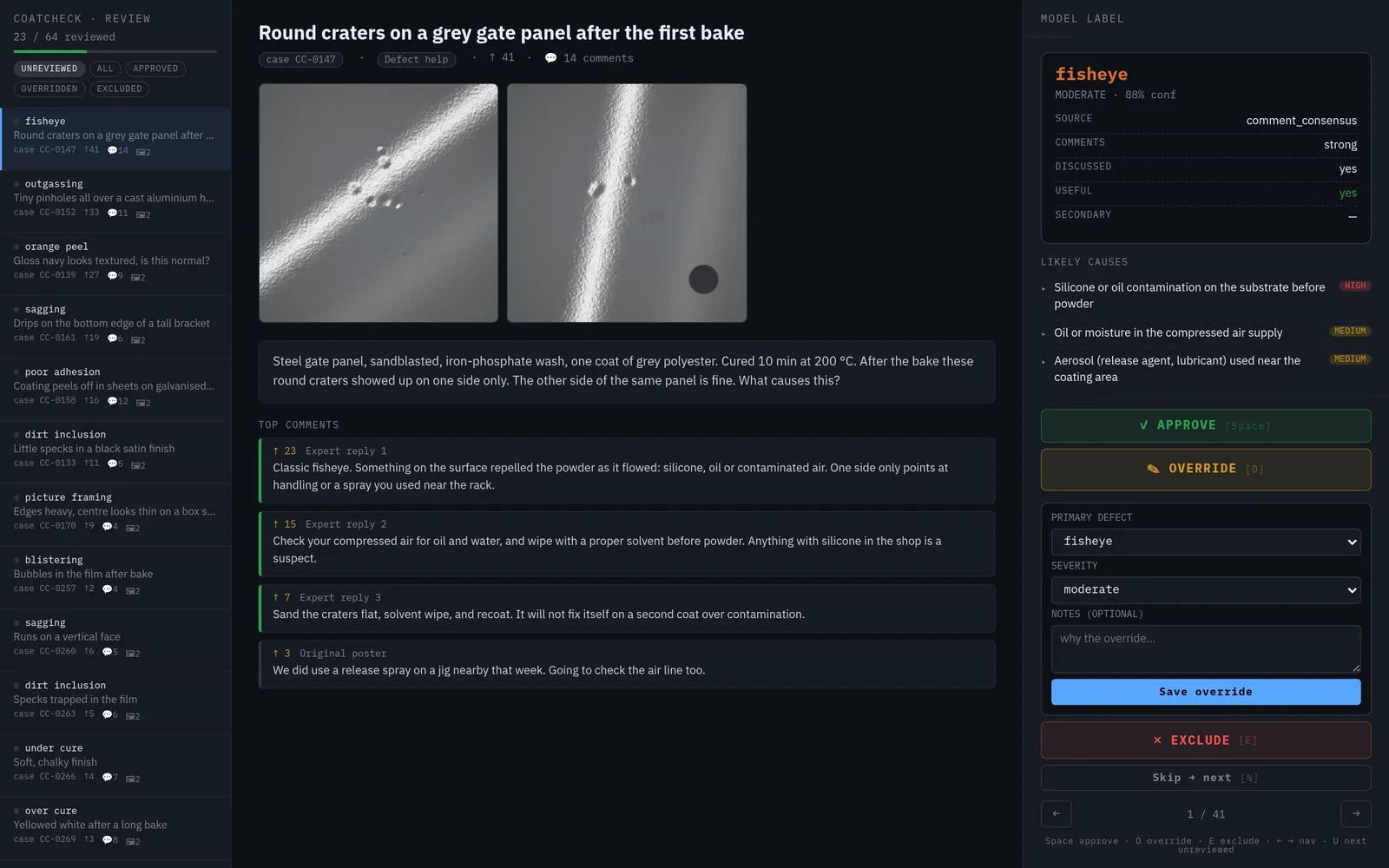
A label from a machine isn’t the truth until a person agrees with it. So we built a review screen. It shows each case with its photos and the experts’ replies next to the label the software chose. The reviewer can accept it, change the defect from a dropdown, or exclude the case with a reason, such as off-topic, conflicting evidence, a bad image or a duplicate.
Why we kept it small
We treated CoatCheck as research for the Iron Rainbow platform and kept the scope tight on purpose. The plan was to prove the diagnosis on messy phone photos first and decide afterwards whether it belongs in the product.
Training our own defect classifier from scratch would have needed thousands of labelled images, and we didn’t have them. An AI model guided by an expert’s checklist worked on day one and explains its answer in words a coater recognizes. We wrote that expert knowledge as plain text a coating technician can read and change without us. Every label the pipeline produces is kept, so the collection can later train a model of Iron Rainbow’s own or give the shop a set of similar past cases to compare against.
A labelled set waiting for review
CoatCheck is a working prototype. The diagnosis service and the review screen both run, and a first set of 64 defect cases from coaters’ posts, with their photos, is labelled and waiting for review. It has not been put in front of customers. The same thinking about defects and their causes feeds into how Iron Rainbow plans inspection in Rainbow Flex, where every finished job can one day add another labelled example.
Screens
Keep reading